

Your website has undergone optimization. New content has been published, technical issues fixed, and improvements implemented. You check Google rankings and find they’ve actually dropped.
That’s unsettling. But before you panic, understand that this is normal. It might actually mean the strategy is working exactly as intended. Before you worry, learn why this happens and how to tell the difference between normal volatility and genuine problems.
Most business owners don’t know this: Google sometimes drops your rankings intentionally when you improve your site. Even when those improvements are completely legitimate.
This sounds counterintuitive until you understand the mechanism. Basically its a “slump before the jump” phenomenon.
Google patented this behavior in 2014. It’s called the “Rank Transition Function.” Here’s the actual process:
- Your site improves (new content, technical fixes, better user experience)
- Google detects the improvement
- Google drops your ranking temporarily instead of rewarding you immediately
- Then it rebuilds your position gradually over time
Why does Google do this?
Google has been manipulated thousands of times by spammers. When someone uses fake “improvements” (purchased links, keyword stuffing, algorithm gaming), they expect instant results. When Google drops their rankings instead, they panic. They frantically undo changes, build more fake links, and take increasingly desperate measures.
That panic response reveals who the spammers are.
Your response differs completely. You trust the process. You recognize that real improvements take time. That patience separates you from spammers in Google’s eyes.
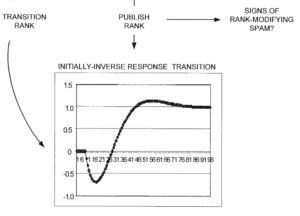
Proof Google Still Uses This Strategy
Google documented this strategy in their own patents. The May 2024 leak of Google’s internal API documentation provides critical confirmation: Google continues to employ behavioral ranking adjustments and user engagement re-ranking mechanisms as core components of their ranking algorithm.
Beyond the patent evidence, Google’s leaked internal systems reveal the company monitors user engagement data continuously. The system tracks good clicks, bad clicks, dwell time, and return patterns over 13+ months. This data feeds directly into ranking adjustments, meaning Google literally builds behavioral testing into its core ranking process.
The strategy hasn’t changed. It’s evolved. But it’s definitely still happening.
This isn’t theory. Google built this into their ranking system. Internal documentation confirms it’s still active today.
5 Signs Your Rankings Are Behaving Normally
Certain ranking fluctuations happen automatically as part of Google’s evaluation process. These signals indicate your site is being tested and assessed, not that something is broken.
✅ Rankings move up and down by 5-10 positions weekly
Google constantly adjusts rankings based on fresh data, user behavior, and algorithm refinements. Weekly fluctuations happen automatically as part of the process, not as a sign of trouble.
✅ Initial drop of 10-30 positions after optimizations, followed by gradual recovery
This shows the rank transition function operating as designed. When you see a drop within weeks of improvements, then a slow climb back up, that’s textbook normal behavior.
✅ Different rankings on mobile vs. desktop
Google uses different ranking factors for mobile and desktop. Your position can easily vary by 5-15 spots between devices.
✅ Volatility during Google algorithm updates
Google rolls out core updates and algorithm changes regularly, causing rankings to swing. This normalizes within 2-4 weeks. If you observe movement during a known update period, wait before reacting.
✅ Gradual improvements rather than instant jumps
Real SEO produces no overnight miracles. If you see slow, steady upward movement over weeks and months, that’s exactly what success looks like.
5 Red Flags That Require Immediate Attention
These signals indicate genuine technical problems or penalties that need investigation. They differ clearly from normal volatility and warrant corrective action.
❌ Complete disappearance from search results (de-indexing)
If your pages vanish entirely from Google and not appearing at all, check Google Search Console immediately for indexing errors or manual actions. Something has broken..
❌ Manual action penalty notification in Google Search Console
Google’s human reviewers flagged your site for violating their guidelines. This requires immediate attention.
❌ Sustained traffic drop of 50%+ with no recovery after 60 days
Normal volatility resolves. If you’re down significantly for two months straight with no signs of recovery, something needs investigation.
❌ All pages dropping simultaneously across the board
When every page tanks at once, that usually points to technical problems, server issues, robots.txt blocking Google, site-wide redirect problems, or infrastructure failures.
❌ Competitor content clearly outranking despite obviously inferior quality
If a competitor’s thin, low-value content consistently beats your comprehensive, helpful content, that may indicate they’re executing a stronger strategy or that your site has underlying factors causing ranking decline that need investigation..
What’s Actually Being Monitored (The Full Picture)
Most people focus only on rankings. That’s the mistake. The real story lives in the complete picture:
Organic traffic trends (weekly and monthly)
Rankings fluctuate constantly, but traffic tells the truth. Organic content strategies like consistent blogging help build this traffic baseline over time. Look at overall trajectory, not daily position changes.
User engagement metrics (time on page, bounce rate)
How people interact with your content matters more than where you rank. Strong engagement typically precedes ranking improvements.
Conversion rates from organic visitors
Are organic visitors becoming leads and customers? That’s the metric that impacts your business.
Keyword visibility across hundreds of terms, not just 5-10
Obsessing over a handful of keywords misses the bigger picture. Real visibility tracks across your entire keyword universe.
Crawl errors and indexing status
Technical health determines whether Google can rank your content. This constant monitoring catches issues early.
Multiple metrics get reviewed weekly. If something is genuinely wrong, you’ll hear about it immediately with a correction plan. You won’t be left wondering. Data-driven SEO strategies rely on analyzing these metrics holistically rather than obsessing over individual ranking positions.
What NOT to Do When You See a Ranking Drop
The most common reactions to a ranking drop are the most harmful. Here’s what I’ve seen kill SEO progress, and what to do instead.
Don’t Pivot Your Strategy Every Few Weeks
Why it backfires: SEO is a slow-burn process. Google needs time to assess the changes you’ve made. If you switch tactics every time you see a dip, you reset the evaluation clock. You’ll never get out of the testing phase.
Better move: Commit to any major strategy for a full 90 days before judging it.
Don’t Roll Back Your Improvements
Why it backfires: That drop you’re seeing might be Google temporarily testing your new, better content. If you delete it or revert changes, you’ve just thrown away the work that was about to earn your rankings.
Better move: Trust that you made the right improvements. Give them time to settle.
Don’t Launch a Link-Building Blitz
Why it backfires: A sudden, desperate surge of new backlinks is a giant red flag to Google. It looks exactly like manipulation because it usually is. This can turn a temporary fluctuation into a manual penalty.
Better move: Keep your link-building steady and natural, regardless of ranking movements.
Don’t Obsess Over Daily Position Checks
Why it backfires: Rankings can shift multiple times a day. Daily tracking creates noise and anxiety, blinding you to the actual weekly or monthly trend that matters.
Better move: Check rankings once a week. Focus your energy on overall traffic and conversions.
The Patient Response That Actually Wins
The best response to ranking drops often involves doing nothing.
Wait 14-21 days. In most cases, Google’s testing mechanism operates as intended. Sites that maintain course while competitors panic ultimately rank higher.
A client’s rankings dropped 25 positions two weeks after service page optimization. They voiced concern. After explaining the rank transition function, they waited 60 days without making changes. By day 45, they ranked 15 positions higher than their original baseline. No additional changes were made. They waited and trusted the process.
Why Understanding This Gives You an Edge
Most businesses abandon SEO within the first six months.
They quit right when compounding results begin. They misinterpret normal volatility as failure. They panic during ranking dips and chase quick-fix tactics that backfire.
You possess different knowledge now.
You understand the difference between normal fluctuations and genuine problems:
- You won’t panic when rankings move
- You’ll stay consistent while competitors quit
- You’ll build compounding gains while others reset repeatedly
- You’ll develop lasting authority instead of chasing temporary visibility
Marathon training illustrates this principle well. Someone who trains consistently for months outperforms someone who trains hard for two weeks, quits, starts over, quits again. Every single time. Consistency beats intensity.
What to Do Right Now (Your Action Plan)
It’s completely okay to monitor your rankings. It’s completely okay to ask questions when you see decline in the early months. That’s smart business.
What matters is perspective and planning.
A good SEO company with a real local strategy knows exactly what’s happening during volatility. They explain the difference between normal testing and genuine problems. They track comprehensive metrics and not just positions. They communicate proactively when something needs attention.
You should expect movement in the first four weeks. Check rankings if you want. Monitor what you see. Ask your SEO company to explain the changes. This is normal.
Weeks five through twelve bring increased volatility. Rankings might drop significantly. Your SEO company should explain this pattern before it happens, not after. Ask them to show you the traffic data and engagement metrics alongside the ranking drops. This is where the rank transition function typically operates.
Starting in week thirteen and beyond, volatility decreases. Trends become clearer. If your traffic is up, your pages are engaging visitors, and your conversions are stable or improving, the SEO is working. Specific ranking positions matter less than the overall upward trajectory.
If your SEO company can’t explain what’s happening, if warning signs appear that they dismiss, if communication becomes evasive, that’s when to question the work. But temporary ranking drops during the trust-building phase are not a reason to panic. They’re a reason to verify that your partner has a plan and understands the process.
The Bottom Line
SEO takes time because Google builds trust in websites gradually. Sometimes rankings drop before they rise. Google does this intentionally to identify manipulators.
The May 2024 leak of Google’s internal documentation confirmed what SEO professionals have known: Google uses time-delayed behavioral monitoring systems over extended periods to separate legitimate businesses from spam operations.
You know what’s normal. You recognize what deserves concern. You understand that patience is your competitive advantage. You know exactly what to watch for.
Month three might feel quiet. Traction appears after that. Eventually you reap what you planted. You keep reaping it as long as you maintain the work.
That’s the real story behind SEO timelines. It’s not magic. It’s not luck. It’s a system designed to find and reward genuine quality over time.

- Local SEO Isn’t Enough: AI Visibility for Medical Clinics & Healthcare Providers - February 12, 2026
- Why SEO Rankings Can Drop Before They Rise (And How to Know If It’s Working) - January 20, 2026
- Top Local Business Statistics for 2026: Trends Every Owner Should Know - January 10, 2026